
Using first-party sources for accuracy
September 7, 2026
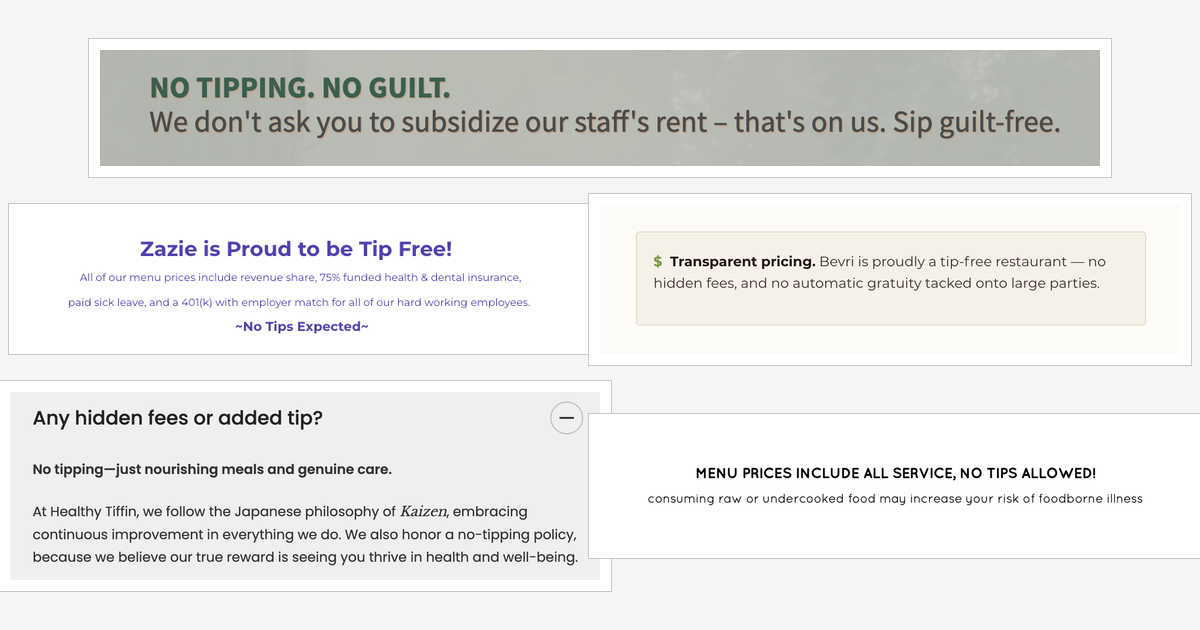
Real examples of first-party sources: restaurants stating their own no-tip policy, in their own words. Clockwise from top: Good Vybes & Brews, Bevri, Pearl Petaluma, My Healthy Tiffin, and Zazie.
Figuring out whether a restaurant charges a mandatory fee seems like something reviews should answer: someone has already eaten there, seen the bill, and written about it.
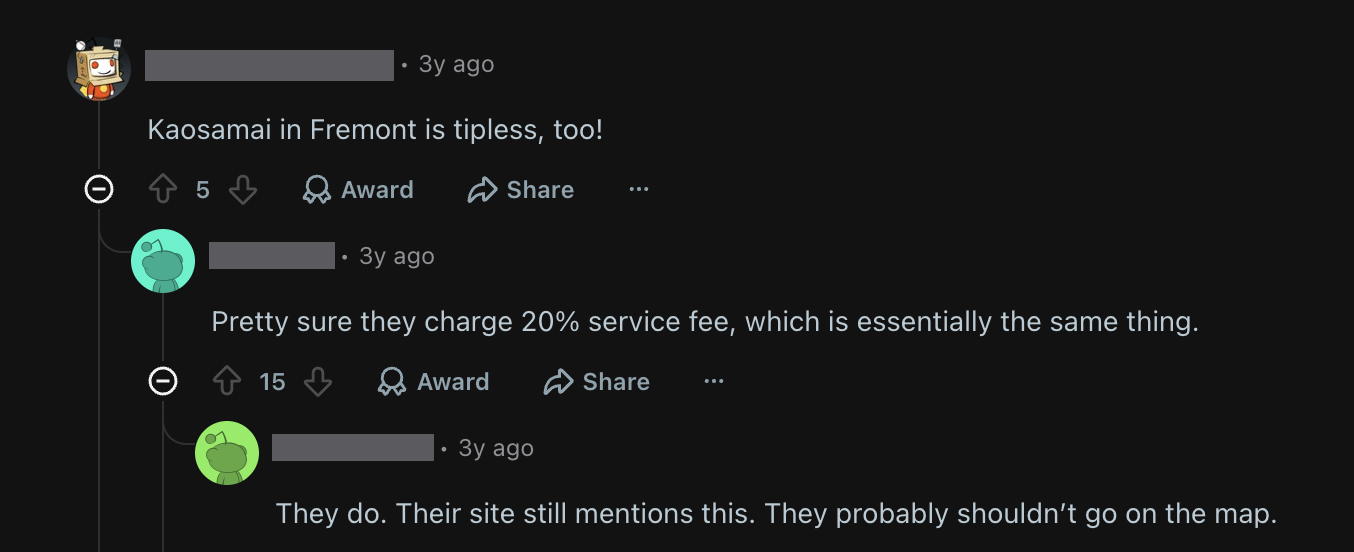
The problem is that reviews are one step removed from the actual policy. A reviewer might misread a receipt, confuse a large-party gratuity with a fee that applies to everyone, or describe a policy that has since changed. Different locations of the same restaurant can also have different policies.
That’s why we use first-party sources whenever possible: the restaurant’s own website, menu, or published policy. Instead of relying on someone’s interpretation of what a restaurant charges, we can point directly to the restaurant stating the policy in its own words.
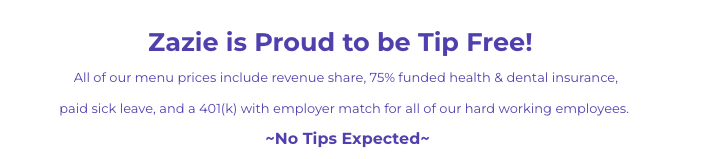
First-party sources also make every entry we publish independently verifiable. You don’t have to trust our interpretation or someone else’s review; you can open the source and check it yourself.
The tradeoff is coverage. Some restaurants clearly charge fees but don’t publish those policies online. Until there’s a reliable first-party source, they may not appear at all.
However, secondary sources are still beneficial. A Reddit thread or a review is often how we hear a restaurant is worth checking in the first place. But if we ever lean on them more directly, the two need to stay clearly distinguished, not blended as if a comment and a restaurant’s own words carry the same weight.
That means the map can be less complete, but what is published has a clear standard behind it. For now, first-party is the bar.